

 The next decade of real estate will not be defined by one trend. It will be defined by a collision. Artificial intelligence will reshape how assets are found, financed, built, operated, leased, and sold. Bitcoin and digital assets will begin to influence how wealth moves into housing and how collateral is structured. Tokenization will fracture ownership into smaller, faster, more liquid slices. The U.S. housing shortage will keep affordable housing, smaller homes, manufactured housing, and modular construction in the center of the capital conversation. And at the same time, boutique hotels and short-term rentals will keep blurring the line between real estate and hospitality. ULI and PwC’s 2026 Emerging Trends in Real Estate report, built from insights from more than 1,700 investors, developers, lenders, and advisors, makes the broad point clearly: the industry is not returning to old norms. It is being reconfigured.
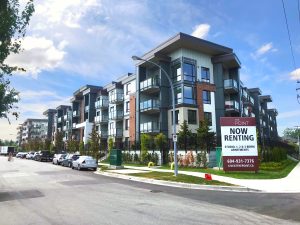
The biggest structural force underneath everything is brutally simple: America still does not have enough housing. Freddie Mac’s latest estimate puts the U.S. housing shortage at 3.7 million units, even after the housing stock increased by 5.8 million units since 2020, because household formation and latent demand grew even faster. At the same time, NLIHC says extremely low-income renters face a shortage of 7.2 million affordable and available rental homes, with only 35 affordable and available homes for every 100 extremely low-income renter households. That means the next decade’s most durable real-estate thesis may be less glamorous than people want and more powerful than they realize: housing that normal people can actually afford.
That is exactly why the market is shifting toward smaller footprints and lower-cost formats. NAHB says the median new-home size fell from 2,200 square feet in 2023 to 2,150 square feet in 2024, the lowest in 15 years, and third-quarter 2025 data still showed median new single-family size at 2,176 square feet. This is not a design fad. It is an affordability correction. And NAHB’s affordability math is sobering: about 88.2 million households, or roughly 65%, cannot afford the median-priced $413,595 new home at a 6% mortgage rate; under a 6.5% rate and a higher median new-home price, the number priced out rises to 100.6 million households, or about 75% of all U.S. households. The next decade will belong less to the oversized house and more to the right-sized, financeable, lower-operating-cost home.
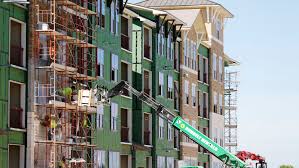
That shift opens the door for manufactured, modular, and what many consumers casually call “kit” houses. McKinsey says modular techniques can accelerate end-to-end homebuilding timelines by 20% to 50% while reducing costs by up to 20%. That matters because speed is not just a convenience; speed lowers carrying costs, financing friction, site overhead, and schedule risk. McKinsey also notes that less than 4% of current U.S. housing stock was built using modular techniques, compared with 15% in Japan and 45% in Finland, Norway, and Sweden. Translation: the U.S. likely has far more room to industrialize housing production than most investors appreciate. What comes next is not just “more prefab.” It is a broader move from construction as one-off craftsmanship to housing as a semi-industrial product.
Affordable housing itself is also becoming more investable, more institutional, and more strategic. HUD’s LIHTC database now tracks 54,102 projects and 3.7 million housing units placed in service between 1987 and 2023. That means affordable housing is no longer some side pocket of public-interest capital; it is one of the largest and most enduring real-estate production systems in America. Pair that with the shortage of deeply affordable units and the next-decade implication is obvious: preservation, recapitalization, tax-credit equity, workforce housing, manufactured housing communities, and smaller-format for-sale housing will not be niche. They will be core.
Now layer AI onto all of this, and the game changes again. McKinsey estimates that automation and AI applied to real estate, construction, and development could unlock roughly $430 billion to $550 billion in annual value globally. JLL says the share of companies running CRE AI pilots exploded from 5% to 92% in just three years, while Deloitte’s 2026 CRE outlook found 19% of firms still in the early stages of their AI journey and 27% already running into implementation challenges. In plain English: nearly everyone has started, but very few have embedded AI deeply enough to create durable advantage. Over the next decade, the winners will not simply “use AI.” They will redesign underwriting, leasing, maintenance, energy management, fraud detection, tenant screening, portfolio analytics, and capital planning around AI-native workflows.
AI will also change what gets built, not just how buildings are run. JLL projects that nearly 100 gigawatts of new data centers will be added globally between 2026 and 2030, effectively doubling capacity, with the sector expanding at a 14% CAGR through 2030. CBRE says 2026 is on track to set a new U.S. record for data-center leasing activity, with vacancy at historic lows and pricing at all-time highs. That means the old real-estate mantra of “location, location, location” is evolving into something sharper: power, permits, and compute. Land near substations, transmission, fiber, and pro-growth jurisdictions may become some of the most strategically valuable dirt in the country. AI is not just software. It is a land-use event.
Then comes tokenization, which is where real estate starts to behave more like capital markets than slow paper markets. Deloitte predicts $4 trillion of real estate will be tokenized by 2035, up from less than $0.3 trillion in 2024, a projected 27% CAGR. The World Economic Forum frames tokenization as a shift that can make investing more accessible, faster, cheaper, and more transparent by digitizing and fractionalizing ownership of assets like real estate. This is the long arc behind “housing shares,” fractional ownership, and digitally native real-estate products. The next decade will likely see more buildings financed, syndicated, and traded through digital wrappers that reduce ticket size and widen access. The big unlock is not hype; it is broader investor participation and faster capital formation.
Bitcoin and digital assets will play a narrower but still important role. The smart view is not that Bitcoin will somehow replace county clerks and title companies next year. It is that digital assets are starting to leak into the real-estate stack from the wealth side first. The World Economic Forum says retail digital-asset transactions rose more than 125% between January and September 2025 versus the same period in 2024. Axios reported in March 2026 that Better and Coinbase launched a crypto-backed mortgage product allowing borrowers to pledge bitcoin or USDC as collateral for a down payment alongside a standard Fannie Mae mortgage. That is still early and still niche, but it is an important signal: over the next decade, real estate will increasingly interface with digital wealth, tokenized collateral, and on-chain capital rails, even if the plumbing stays conventional for a while.
On the hospitality side, boutique hotels and short-term rentals are set to remain powerful because travelers increasingly want experience, flexibility, and character, not just a room with beige carpet and a motivational lamp. JLL says global hotel investment volumes in 2025 were up 22% from the 2023 trough and that 2026 marks the deepening of a new hotel investment cycle, helped by strong debt markets and slowing supply additions. AirDNA’s 2026 outlook says U.S. short-term-rental occupancy is expected to soften only 1%, while ADR is forecast to rise 1.5%, with listing growth at 4.6%, far below the 20%+ expansion seen in 2021–2022. That is a clue. The easy-pandemic money is gone, but the asset class is maturing into a more disciplined operating business. Over the next decade, expect boutique hotels, branded STR portfolios, wellness hospitality, and hybrid living-hospitality formats to keep converging.
And here is the hidden truth few people fully appreciate: the next decade of real estate will reward investors who stop thinking in property types alone and start thinking in systems. The highest returns may not come from owning the prettiest asset. They may come from owning the most automatable workflow, the most scalable capital structure, the most power-secure site, the most regulation-resistant housing format, or the most affordable product in an undersupplied market. A small home with an AI-optimized operating stack may outperform a larger traditional asset. A modular-housing platform may scale faster than a conventional builder. A tokenized real-estate vehicle may raise capital faster than a traditional syndicate. A boutique hotel with automated pricing, labor scheduling, and guest intelligence may outperform a generic flagged box with higher square footage and lower soul.
So where is real estate investing headed?
Toward smaller and smarter housing.
Toward faster and more industrialized construction.
Toward fractional and tokenized ownership.
Toward AI-run operations and AI-shaped demand.
Toward affordable housing as mainstream strategy, not charity.
Toward hospitality-driven assets that monetize experience.
And toward a world where the edge no longer belongs to the biggest checkbook alone, but to the investor who sees the system before everyone else sees the headline.
Contact us at ameritekpartners.com to AI automate your real estate investment advantage as well as your business itself.
Call 727.304.3320 or email nouveauenterprisesllc@gmail.com for a FREE consultation and more information about our services.
The decade ahead will create massive winners. Not because they guessed right once. Because they saw the future early, built for it on purpose, and moved before the crowd finally called it obvious.
#RealEstateInvesting #AIAutomation #FutureOfHousing #AmeritekPartners